
Brontosaurs are back and Pluto was a planet

When I was a kid, the world made sense. Brontosaurus was a dinosaur. Pluto was a planet, now it isn’t. And if you spun around fast enough on a playground merry-go-round, centrifugal force was trying its best to fling you into low Earth orbit.
Then, somewhere between childhood and paying property taxes, I learned that none of those things were quite as settled as I’d been led to believe in grade school. Oh, the things I think about when I have a sleepless night.
Most of us first experienced “serious physics” on a playground merry-go-round. Someone spun it too fast, you held on for dear life, and it felt like an invisible force was trying to rip you off and launch you into the grass.
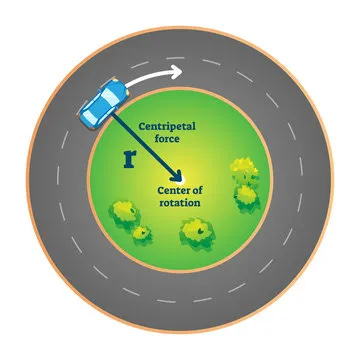
For years, many of us called that feeling centrifugal force, the outward pull. Later, we learned the more accurate term is called, centripetal force, which is actually the inward force keeping you moving in a circle.
So, which is it?
Centrifugal isn’t a force in the same sense gravity. Some may call it a “pseudo-force”. That doesn’t mean it’s imaginary or useless. It means it only appears when you describe motion from a rotating point of view.
Both describe the same event from different viewpoints.
From outside the ride, the real force is inward. Your hands gripping the bars, friction from the seat, and the structure of the ride are constantly pulling you toward the center. That inward pull is what bends your straight-line motion into a circle. Without it, you wouldn’t keep spinning. You’d fly off in a straight line.
But from your perspective on the ride, it feels like you’re being pulled outward. Your body wants to keep moving straight, while the ride forces you to curve. That mismatch is what creates the sensation we casually call centrifugal force.
Now replace the merry-go-round with a moving vehicle.
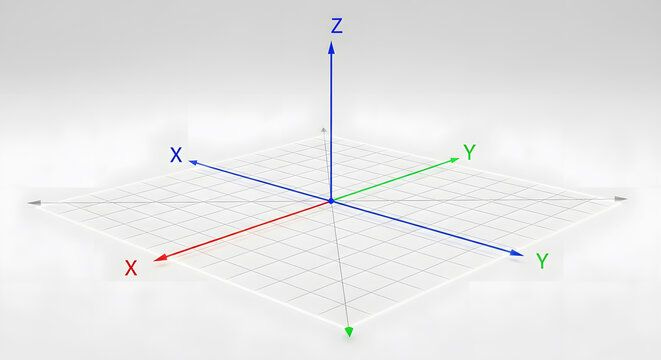
When a car turns, swerves, or spins, the same physics apply. The tires generate inward force through friction with the road, pulling the vehicle into a curved path. Inside the vehicle, occupants feel pushed outward, toward the doors or windows. Nothing is actually pushing them outward. Their bodies simply want to keep going straight while the vehicle changes direction underneath them.
As speeds increase, those forces rise dramatically. A gentle curve at neighborhood speed becomes a powerful sideways load at highway speed. If traction holds, the vehicle follows the intended path. If traction is lost, and as one of my class instructors used to word it, “you’re no longer enjoying the benefits of that friction”, the vehicle may slide, rotate, or spin.
Rollover enters the picture when the forces trying to keep the vehicle moving straight exceed what the tires and suspension can manage especially when something interrupts that motion. A curb, soft shoulder, guardrail, or sudden tire grip can act like a pivot point. Instead of sliding, the vehicle’s momentum is redirected upward and sideways. The center of mass continues moving, and the vehicle can tip past the point where gravity can pull it back down.
At that moment, the same physics that once tried to fling you off a playground ride is now acting on a multi-ton machine. Except there’s no one holding on to a bar at the center to keep it grounded.
And when a vehicle runs out of ways to stay on its wheels, it doesn’t gently fall over. It rotates.
Disclaimer: I know. I probably just triggered a collective wince from the entire physics department with my loose interpretation of terminology. But hey, I'm not trying to pass an exam here. My goal is to bridge the gap between abstract concepts and our tangible experiences, even if it means taking a few creative liberties with Newtonian principles.