Why Speeding Complaints Don’t Always Look Like Enforcement

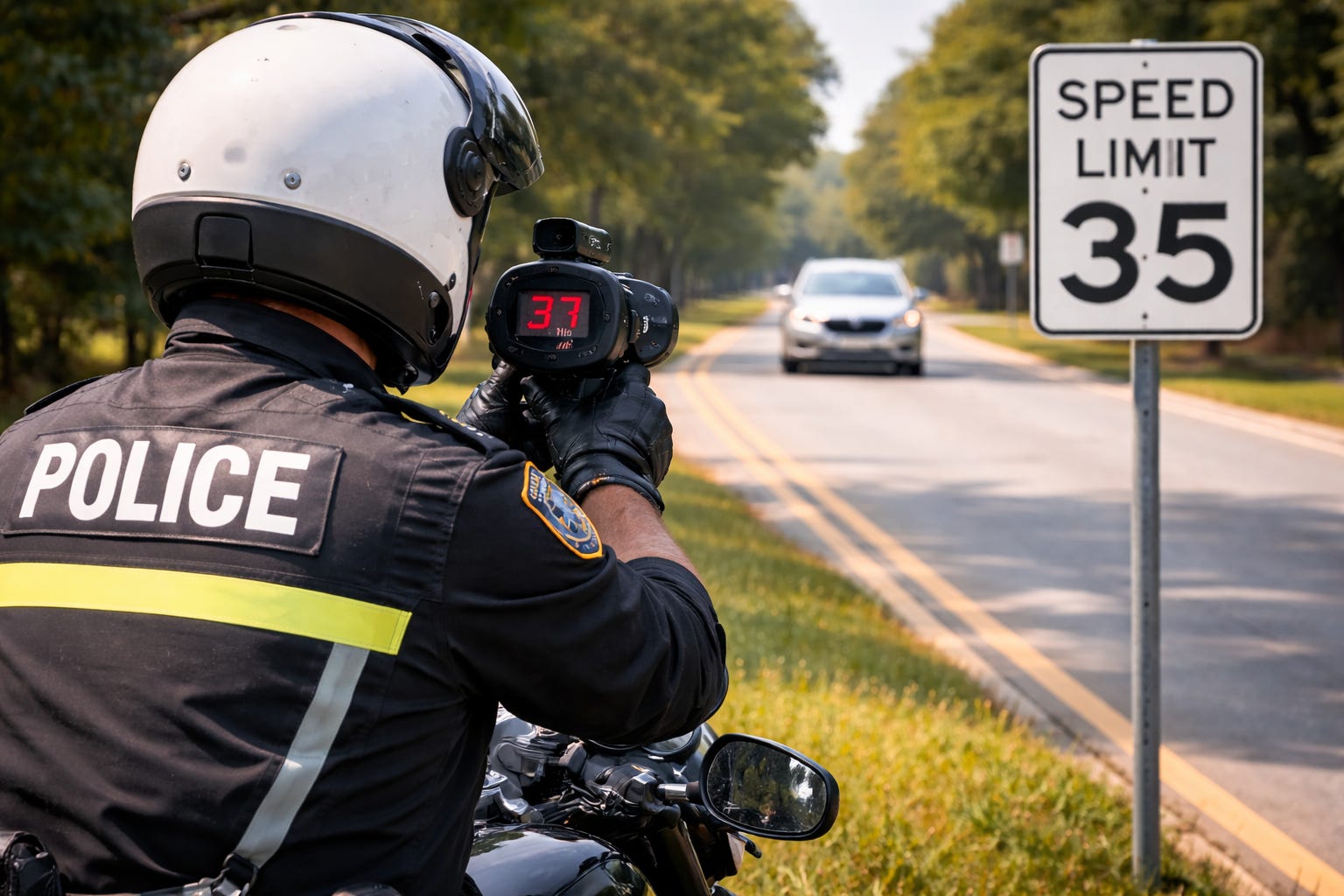
Every police department knows the routine: emails and calls flood the inbox about a street where drivers are flying. The mayor forwards the concern to the chief, the chief passes it to sergeants, and the sergeants finally tell patrol officers to go check it out. Officers set up radar, sit for an hour, and see nothing. Residents see no tickets and assume nothing is being done.
Perception vs. Reality
Humans are often poor at estimating speed. One fast car can make it feel like every driver is speeding. A minor incident, such as a child nearly hit on a driveway, can generate dozens of emails. Residents often plead for the safety of their children or demand immediate speed bumps.
In one recent example, a juvenile gained speed on a steep driveway and collided with the side of a moving car. Thankfully, no one was seriously hurt. Residents’ reactions were immediate and intense, with many claiming widespread speeding and demanding intervention. In reality, one isolated event does not create a systemic problem.
Staffing and Patrol Reality
Traffic enforcement is rarely the only job. In small towns, five or six officers cover hundreds of miles of roadway while handling emergencies, domestic calls, fraud investigations, and first aid. Only one or two officers may focus on traffic. Their duties include:
Crash investigations
Reviewing crash reports from other officers
Speed surveys and engineering judgments
Responding to emails and resident complaints
Installing child car seats
Even when officers are on patrol, most drivers slow down at the sight of a police vehicle. That is effective enforcement, but it remains invisible. Residents see no tickets and conclude that nothing happened.
Data Does Not Always Match Frustration
One of the hardest concepts to communicate is that data and perception rarely align perfectly. For example, over a week, a block may see 40,000 vehicles, with roughly 1,000 going fast enough to justify a ticket. Engineering shows the road itself is safe because signage, sight distance, and lane width are all within standards.
Yet residents are correct: 1,000 cars speeding in a week is concerning. The challenge is that these vehicles are spread over a week rather than concentrated. Even with radar, digital signs, or patrol, catching every single one is impossible. Enforcement is strategic rather than reactive. Complaints guide priorities, but no street is special above others with similar risk levels.
Another factor residents rarely see is that enforcement is not always as simple as stopping every driver who exceeds the speed limit. Each officer develops a personal threshold for when a stop is appropriate. Some may stop a driver for just a few miles per hour over the limit, while others may focus on more significant violations depending on the traffic conditions, safety risk, and overall situation. In New Jersey, this is generally left to officer discretion. In other parts of the country, some agencies establish internal guidelines for enforcement thresholds. Either way, the decision to initiate a stop is not automatic every time a radar unit records a number above the posted speed.
Why “Catch the Real Criminals” Isn’t the Whole Story
You have probably heard the phrase: “Go catch real criminals!” Traffic enforcement is not lazy work. Studies show that police presence, which includes traffic enforcement, deters more serious crimes even while officers monitor speed. Often, the same residents calling about a speeding car are the ones making this argument.
In one case, residents on a particular road signed a petition requesting increased speed enforcement. Enforcement did increase, but the surprising part was that many of the speeders turned out to be the same residents who had signed the petition.
The truth is that slowing traffic, preventing collisions, and collecting data often looks invisible, but it works.
“How Many People Have to Get Killed?”
This is the emotional question residents ask most. It is understandable because everyone wants safety immediately.
Here is the reality: traffic safety work is preventive rather than reactive. Waiting until a fatal crash occurs to act would be a failure. Officers, engineers, and planners rely on patterns, data, and risk evaluation instead of individual fear or social media posts to make decisions.
A single crash or near miss may feel urgent, but systemic improvements are based on repeated patterns and long-term data. This is why we have engineering standards. Enforcement is spread across time and location. The goal is to prevent fatalities before they happen, even if residents never see the quiet work being done.
Takeaways for Residents
One isolated incident does not equal a systemic problem.
Patrol presence often prevents speeding even without tickets. I call it, "passively enforcing the laws.”
Traffic enforcement is strategic, balancing multiple streets, complaints, and emergencies throughout their area of responsibility.
Residents’ complaints matter, but no one street is more important than another.
The invisible work, such as counting cars, running surveys, coordinating with the DOT, and implementing preventive measures, is what truly keeps streets safe.
Next time you wonder why nothing is being done, remember that sometimes the quiet, unglamorous work is exactly what saves lives.
One uncomfortable truth about traffic complaints is that the people asking for enforcement are often the same people driving those roads every day. Nearly all of us have crept a little over the speed limit, rolled a stop sign, or hurried through a yellow light. Traffic safety is not just about what “those drivers” are doing. It is about all of us. The safest streets are not created only through enforcement or engineering, but through thousands of small decisions drivers make every day.